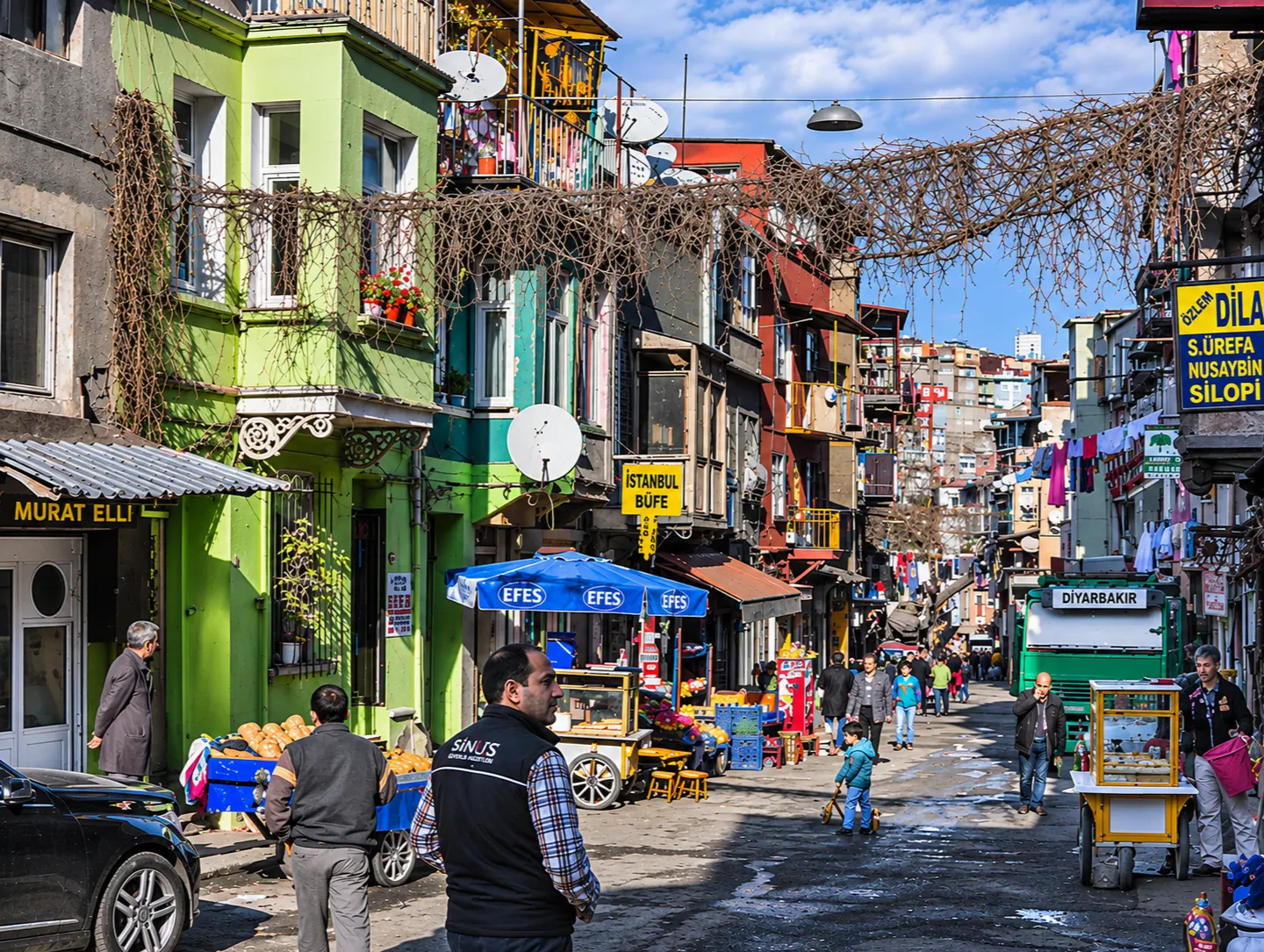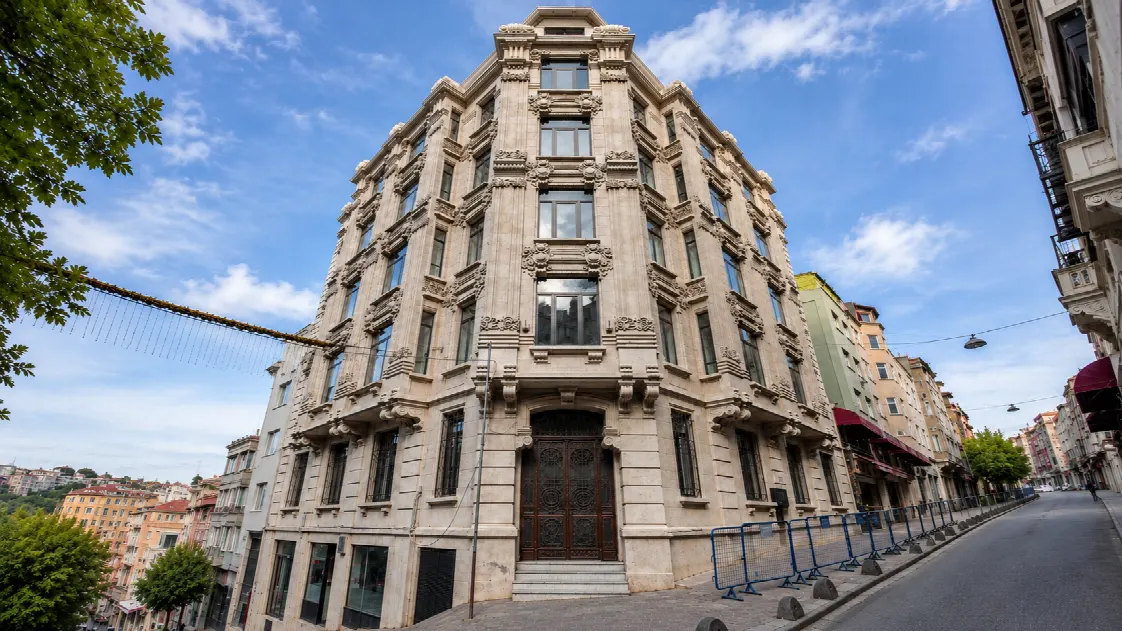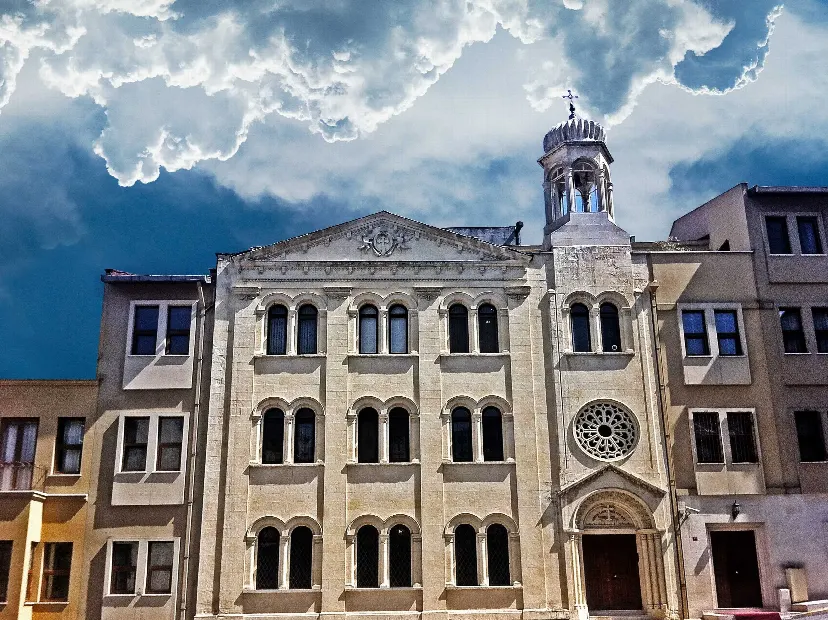
Tarlabaşı doesn't have ticketed sights or famous monuments. What it has is something harder to find in central Istanbul: everyday life that hasn't been polished for visitors. These are the places and scenes that tell the neighborhood's story best, roughly in the order you'd meet them walking downhill from Taksim.
Tarlabaşı Boulevard
Start at the edge of the wide boulevard that runs below Istiklal Street. Stand on the corner and look both ways: on one side, the hotels and shopping streets of Beyoğlu; on the other, the backstreets of Tarlabaşı. The road was built in the late 1980s, and it explains a lot about why the two sides feel so different. Our history of Tarlabaşı covers this in more detail.
The Hidden Churches
Tucked between apartment buildings, you'll find reminders of the communities that built the neighborhood. The Syriac Ancient Church of the Virgin Mary is still a place of worship for Istanbul's Syriac community, and the Saint Constantine Greek Orthodox Church nearby is a quiet survivor of the area's Rum heritage. Be respectful when visiting: these are active community spaces, not attractions.
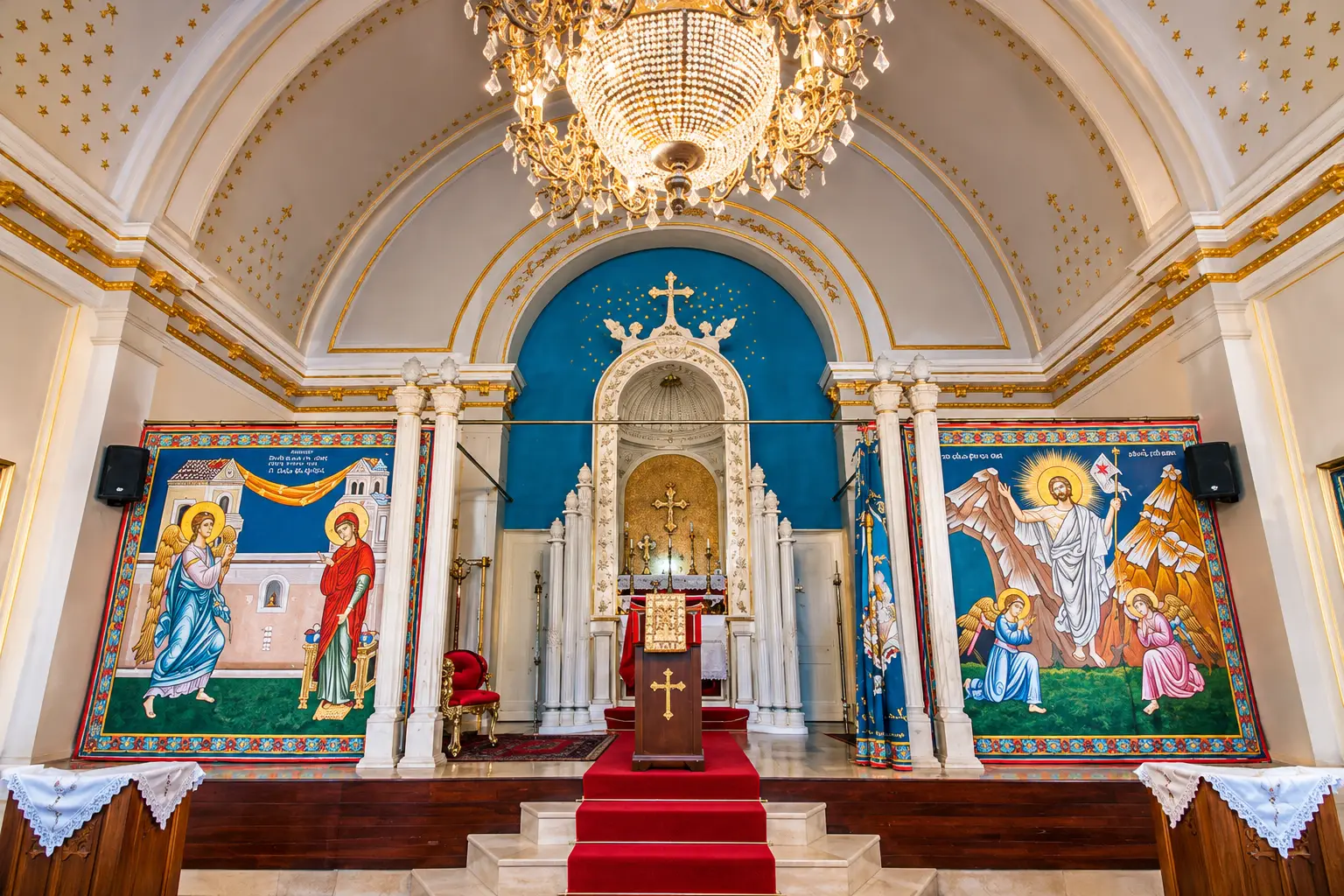
Facades and Bay Windows
Look up as you walk. Many late 19th-century townhouses still show carved stonework, iron balconies and the projecting bay windows called cumba. Around Sakız Ağacı Street you'll see some of the most impressive examples, often standing next to buildings that have lost their roofs entirely.
Artisan Workshops
Small workshops are still scattered through the backstreets. Woodcarvers, carpenters and coppersmiths repair antique furniture and work metal by hand, often in rooms that open straight onto the pavement. If a craftsman is happy to show you what they're working on, it's one of the best conversations you'll have in the neighborhood.
The Mussel Makers
Stuffed mussels, or midye dolma, are a classic Istanbul street snack. Many of them are prepared in Tarlabaşı, where families, many originally from Mardin, clean, fill and cook mussels in large batches before they're sold across the city's nightlife districts.
The Roma Quarter
Further into the maze of lanes is a Roma neighborhood with a long history in the area, known for its music and strong sense of community. Like much of Tarlabaşı, it has been affected by displacement, and it deserves the same respect as any residential street: no photos of people or homes without permission.
Recyclers and Small Traders
Much of central Istanbul's paper and plastic recycling passes through warehouses here. Collectors pull heavy carts up and down the city's hills and bring their loads back to be sorted and baled. Nearby, tiny shops sell second-hand clothes, household goods and everyday essentials at neighborhood prices.
A Neighborhood Kıraathane
Take a break at a traditional coffeehouse, or kıraathane. Sit on a low stool, order a glass of tea or a Turkish coffee and watch the street. It's a simple stop, but it's often where visitors end up chatting with locals.
Taksim 360 and Urban Renewal
The renewal area known as Taksim 360 shows the other side of the neighborhood's story: new residences behind restored or rebuilt facades, right next to streets that haven't changed in decades. Seeing the two side by side is the clearest way to understand the debate over Tarlabaşı's future.
Adam Mickiewicz's Street and the Golden Horn View
Before leaving, pass the street where the Polish poet Adam Mickiewicz lived and died in 1855, a reminder of how international this part of the city has long been. Heading downhill toward Dolapdere and Kasımpaşa, you'll reach a wide view over the rooftops and the Golden Horn, a good place to end the walk.
Seeing It All on Foot
You can see some of these places on your own, but many of them are easy to miss without someone who knows the streets. Our guided walk covers all of them in about 2.5 hours. See the full itinerary, and before you go, read our practical safety guide.