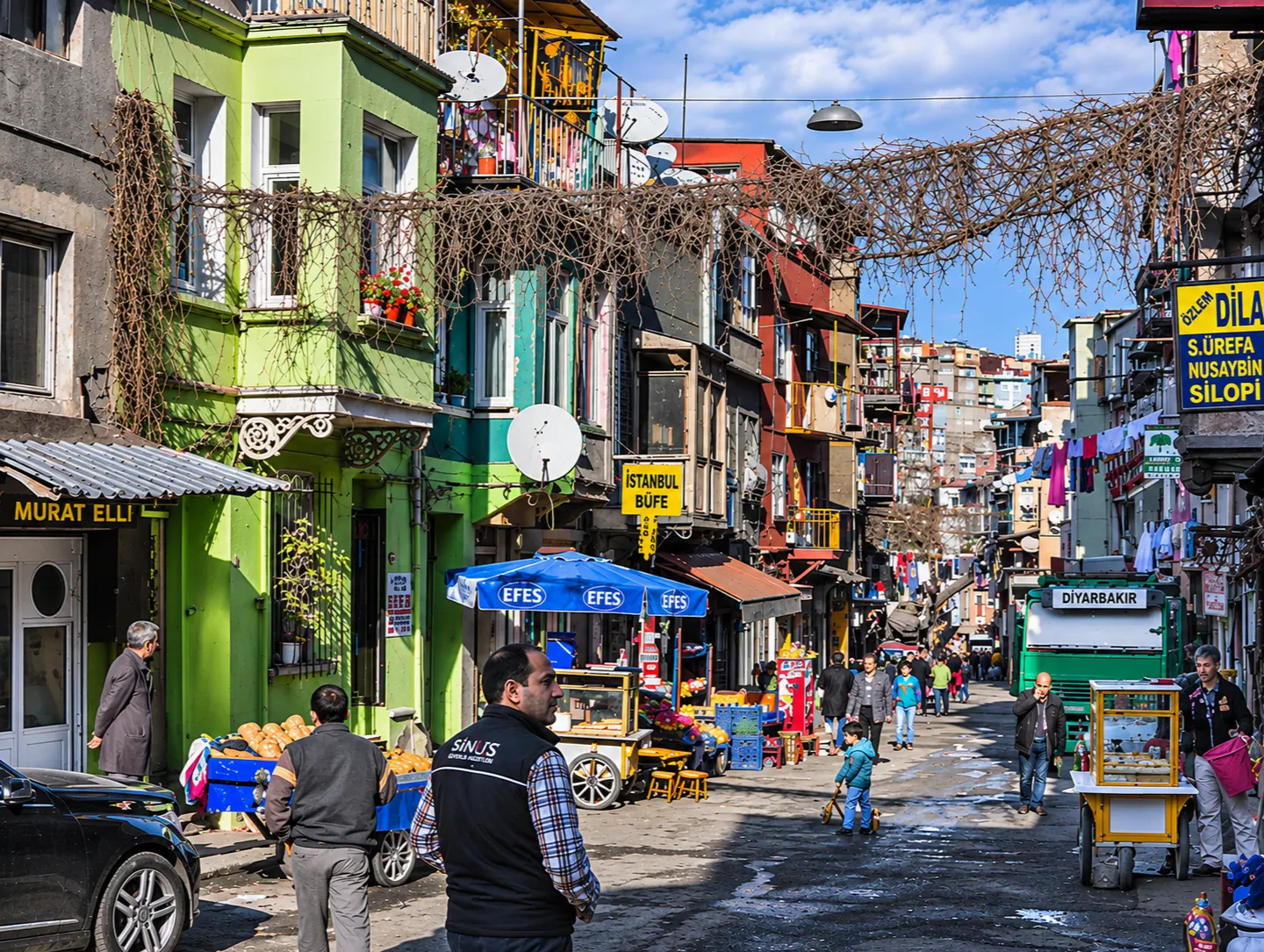
Walk a few minutes downhill from Istiklal Street and the city changes. Elegant stone facades stand next to roofless shells, laundry lines cross narrow lanes and new residential blocks rise behind restored fronts. To understand Tarlabaşı, it helps to know how it got here. This is a short overview of the neighborhood's story, from its 19th-century townhouses to the debates over its future.
A Residential Quarter of Pera
Tarlabaşı is part of Beyoğlu, the district known in the 19th century as Pera. While the Grande Rue de Péra, today's Istiklal Street, was lined with embassies, shops and theaters, the slopes behind it filled with homes for the people who worked in and around it: craftsmen, merchants, clerks and their families.
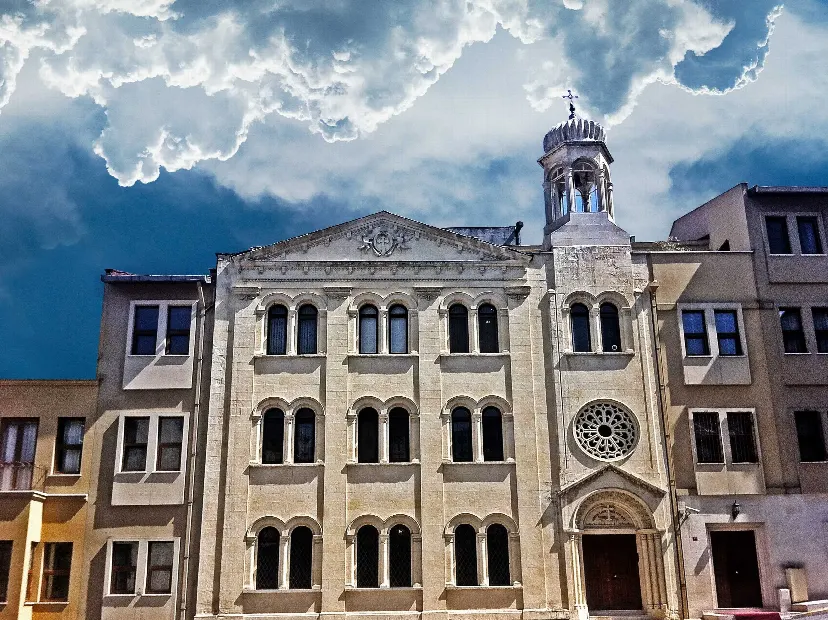
Many of these residents belonged to Istanbul's non-Muslim communities. Greek Orthodox (Rum), Armenian, Levantine and other families lived side by side, and churches and community buildings were built among the houses. A few of them still stand today, including a Syriac church that remains in use.
Architecture: Stone, Bay Windows and Art Nouveau
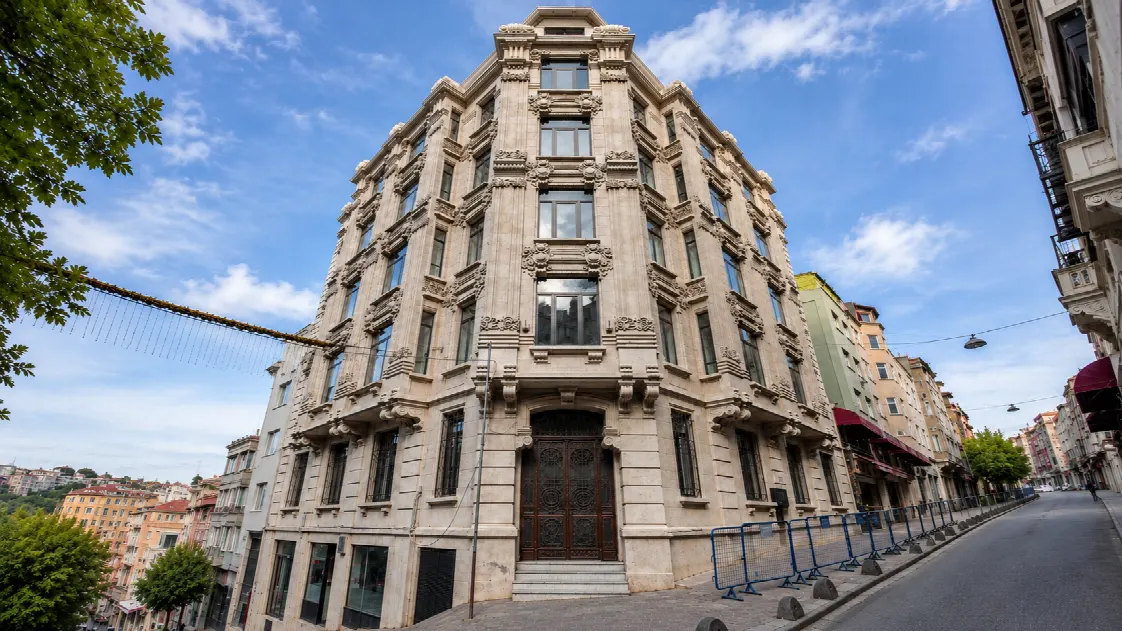
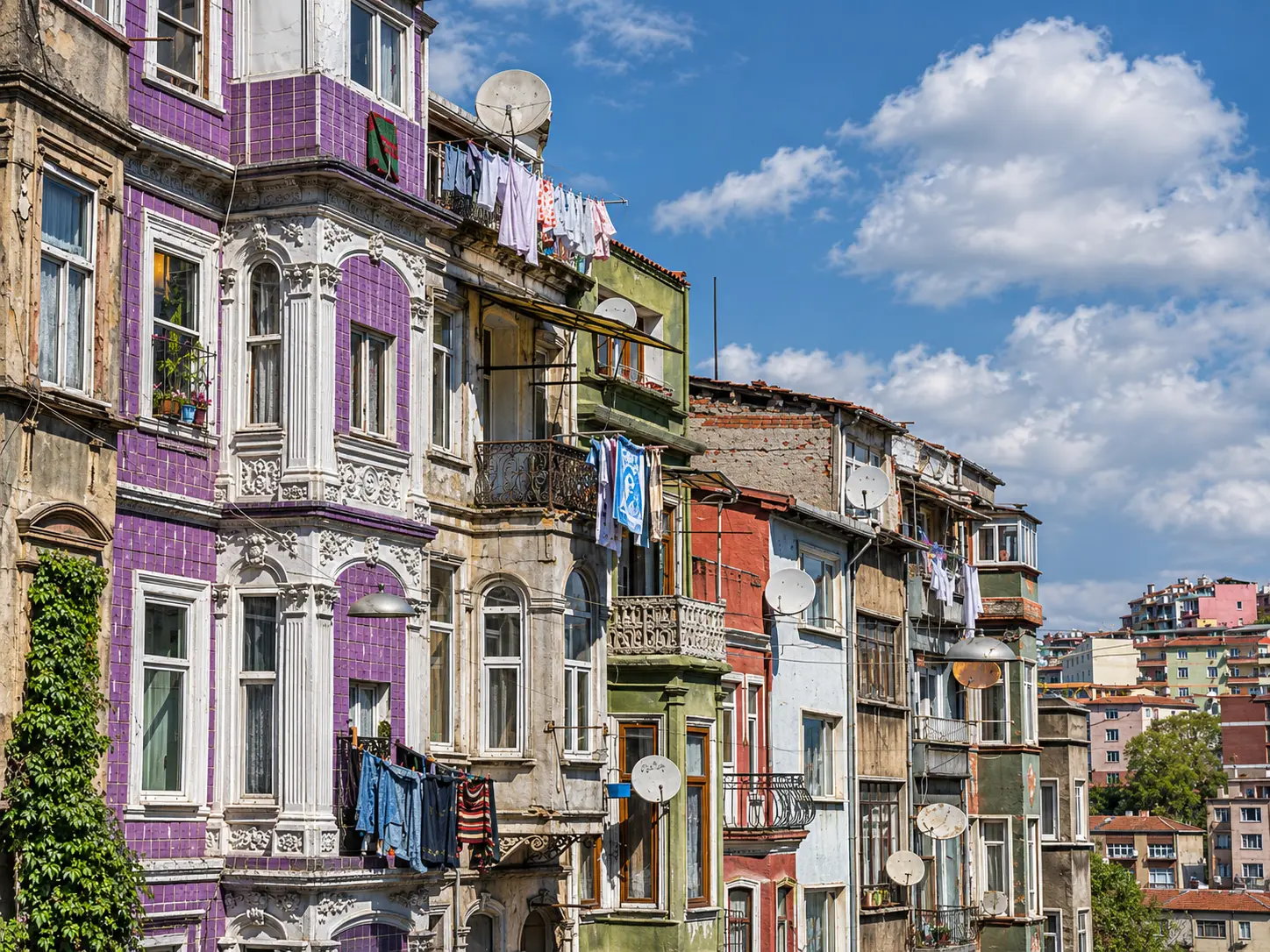
Like much of Pera, the area suffered from large fires in the 19th century, and many timber houses were replaced with masonry buildings. The result is the streetscape you see today: narrow, tall row houses with decorated facades, wrought-iron balconies and the projecting bay windows known in Turkish as cumba. Neoclassical details and touches of Art Nouveau appear on many fronts.
Some locals and writers have called these streets the "Champs-Élysées of Istanbul" for the elegance they once had. Today many of the buildings are in poor repair, which makes the surviving details all the more striking.
Departures in the 20th Century
During the 20th century, much of the neighborhood's original population left. Discriminatory measures and violence against non-Muslim minorities, including the 1942 Wealth Tax, the riots of September 1955 and the expulsion of Greek nationals in 1964, pushed many families to emigrate. Over time, many houses were left empty, rented out or passed to new owners.
New Arrivals
As the earlier communities left, newcomers moved in. Tarlabaşı offered low rents close to the city center, which made it a first stop for many people arriving in Istanbul. Kurdish families from southeastern Turkey settled here in large numbers, especially in the 1990s, alongside an established Roma community. More recently, migrants from African countries and Syria have also made their homes here.
This mix shapes daily life on the streets, from small workshops and recycling warehouses to street barbers, tea houses and the kitchens where many of the city's stuffed mussels are prepared.
The Boulevard That Divided Beyoğlu
In the late 1980s, Tarlabaşı Boulevard was opened as a wide traffic artery through the district. Building it meant demolishing a large number of historic buildings. The new road also created a hard edge: on one side, the busy shopping and nightlife streets around Istiklal; on the other, the backstreets of Tarlabaşı. Many people point to this moment as the start of the neighborhood's long decline.
Urban Renewal and Its Critics
From the mid-2000s, parts of Tarlabaşı were designated for urban renewal. Blocks of historic buildings were emptied and rebuilt as modern residences and commercial spaces behind restored or reconstructed facades, in a project later marketed as Taksim 360.
Supporters describe the project as a way to save collapsing buildings and revive the area. Critics, including many former residents and heritage groups, argue that it displaced low-income households and replaced historic fabric with new construction. Both views are part of the story you'll hear in the neighborhood today.
Tarlabaşı Today
Today, Tarlabaşı is a neighborhood in transition. Restored facades and empty shells, long-time residents and recent arrivals, workshops and new galleries all share the same few streets. That contrast is what makes it one of the most revealing places to understand modern Istanbul.
If you'd like to see these layers in person, our walking tour itinerary covers the boulevard, the hidden churches, the old workshops and the renewal area. For practical advice before you go, read Is Tarlabaşı safe to visit?